
Short Film Concept:
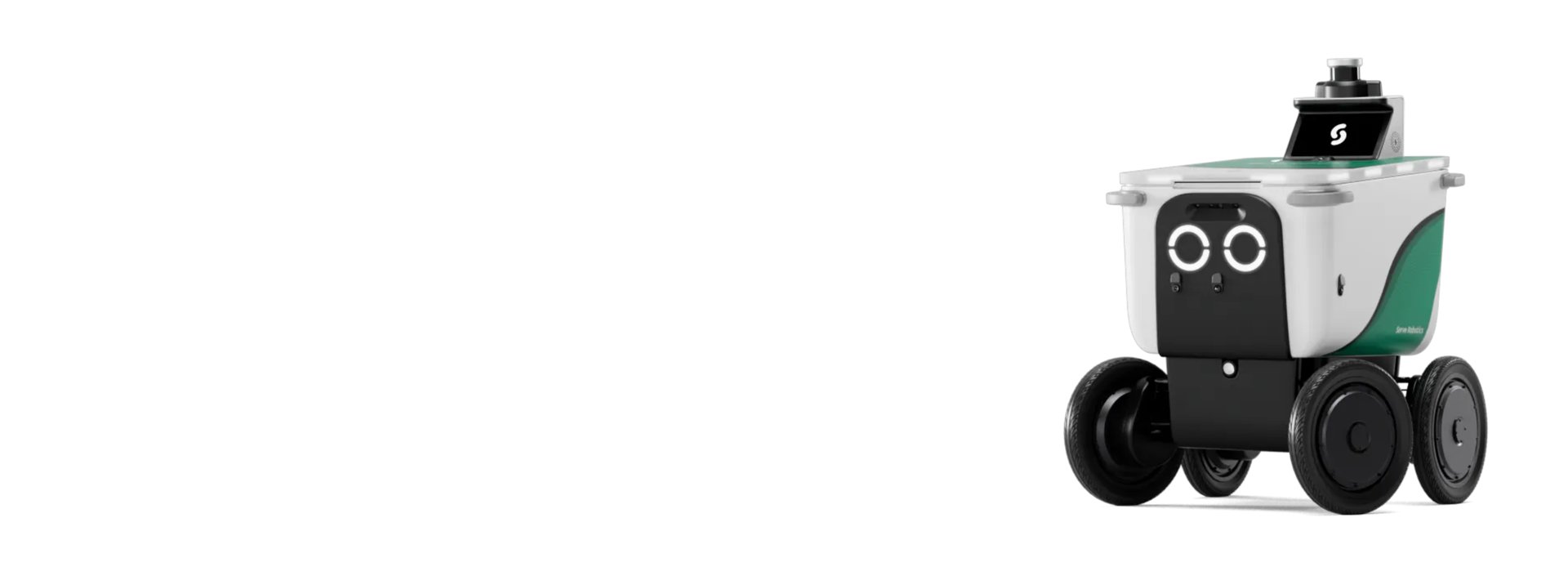
Food Delivery Robot Serve Robotics
Technique & Format
Stop-motion animation.
Duration: 2:00–2:30 minutes.
Designed for film festivals (Annecy, Cannes Short Film Corner, and U.S. festivals).
Main Character
Single-character focus — the robot.
Primary emotions are conveyed through its eyes and on-screen UI messages.
Interaction with People
Humans appear only partially (similar to Tom and Jerry): usually legs and hands, sometimes up to the shoulders.
Types of interaction:
passing legs / kicking legs / hands petting / hands pushing / hands pressing the crosswalk button / flipping it off / filming it on a phone/ tagging it with graffiti / sitting on top and riding it
Film Structure
Intersections are the core structure.
The robot repeatedly stops, signals, and asks for the button to be pressed (“please press the button”).
Each intersection represents a new stage of the story.
Progression:
neutral → strange → dangerous → emotional → climax
Additional Note
The robot is extremely slow. Even casually walking dogs move faster than its top speed.
1: Charging Malfunction
(Robot Thinks It’s Someone Else)
Beginning
The robot is docked at a charging station. At the start, there’s a short circuit — smoke, a glitch in its eyes.
Because of the malfunction, it starts to believe it’s something else — not a delivery robot — and begins acting strangely.
Middle
It continues along its route, but now in a different “mode.”
It raises its delivery flag and tries to move fast, but physically remains just as slow.At intersections, it stops, signals, and asks for the button to be pressed. With each intersection, its behavior becomes more erratic and paranoid:
People ignore it / Someone flips it off / Someone kicks it / Someone tags it with graffiti / Someone jumps on top and rides it.
The robot interprets everything through its altered “identity.”
Its eyes and interface show growing confusion and a distorted perception of reality.
Ending
In the end, the robot is rebooted.
The malfunction disappears, and it returns to being a normal delivery robot. Everything resets back to its default state.
2: Witness to a Murder
(Panic and “Chase”)
Beginning
The robot is making a routine delivery. It arrives at a house, stops at the door, and starts signaling. Its camera is pointed at the entrance. The door opens — a gunshot flash. A person drops. A man runs out, pauses, and looks straight at the robot. The robot records everything, panics, and assumes it’s been seen — that someone will come after it to destroy or take the footage.
Middle
In panic, it tries to escape. Raises its delivery flag and moves at maximum speed (humor: still very slow — even dogs can easily outrun it). At every intersection, it stops and desperately signals: “please press the button, please press the button.”
Progression through intersections:
At first: pure panic
Then: increasingly desperate attempts to get help
People react differently: ignore it, flip it off, kick it into the road, tag it with graffiti, sit on it, film it on their phones
The robot starts seeing every fast passerby or sudden movement as a threat — a chase that may not even exist. The tension builds steadily toward a climax.
© 2026 Lead Star Co.